Call for Speakers

What makes a UXSA talk
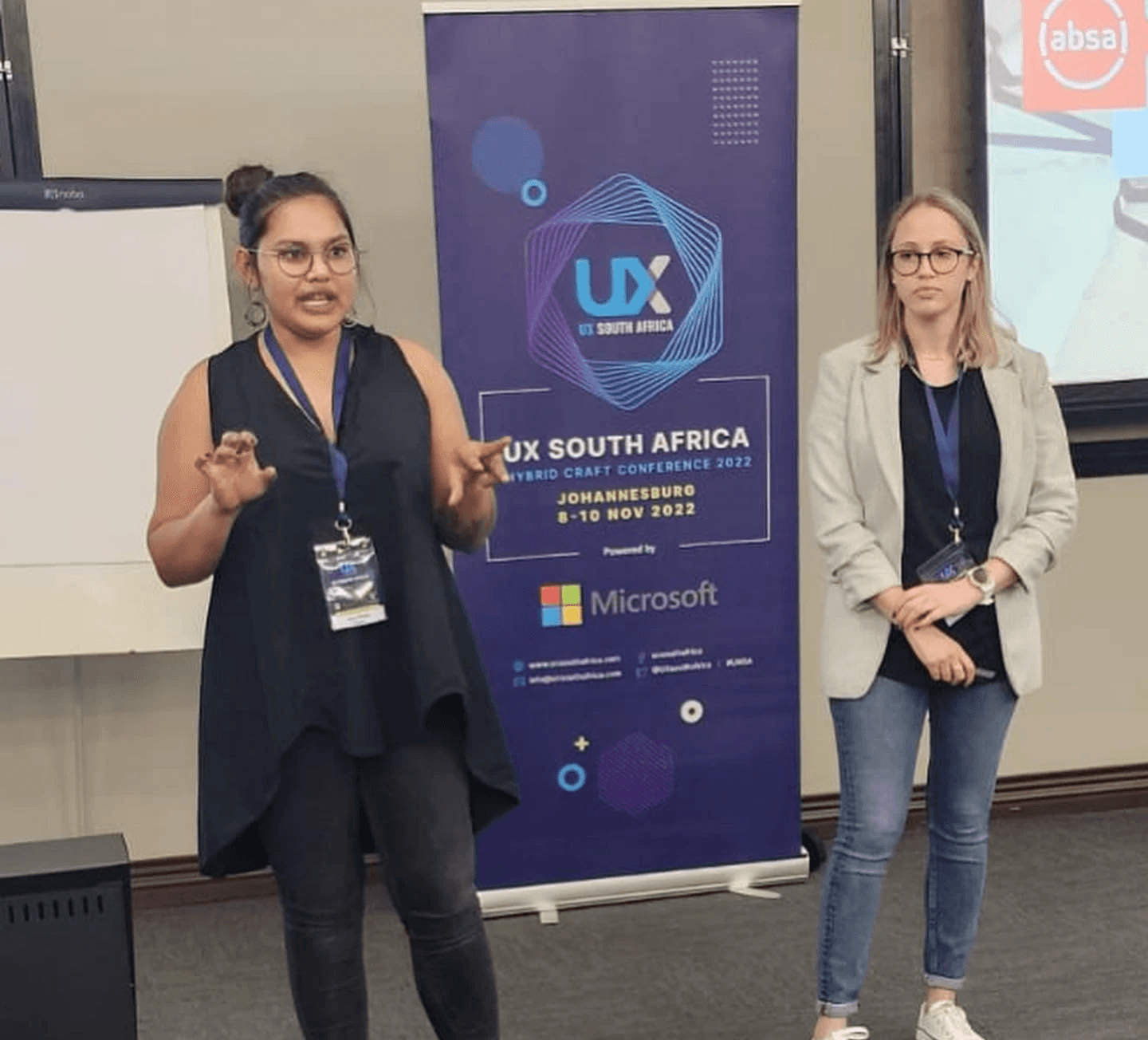
UXSA talks come from practitioners in the work; not commentators on the sidelines. You don't need a big title or stage experience. You need something worth saying and the willingness to say it.
Real stories Work you've actually done; what happened, what you learned.
Sharp questions A question the audience hasn't considered, explored with depth.
Challenged assumptions Something the industry takes for granted that you've found to be wrong.
Useful frameworks A practical approach others can take back to their teams.
2026 Conference Themes
5 conversations we need to have.
Choosing a topic
Start with a question, not an answer.

The strongest talks begin with what we call a seed question, the single question at the heart of your talk that everything else orbits around. It should reflect something that genuinely moves you, resonate with the audience, and connect to something bigger than your specific role
Example seed questions
"If AI can generate a wireframe in seconds, what is the thing a designer uniquely contributes?"
"Why do digital tools built for township businesses keep failing, and what would it take to build one that doesn't?"
"If AI can generate a wireframe in seconds, what is the thing a designer uniquely contributes?"
"What happens to a design team's culture when half the production layer is automated?"
Elevator pitch
Put it in one paragraph.
Before you submit, test your topic with this structure. If it feels true — not forced — you probably have a talk worth giving.
Talk Pitch Template
"I'm exploring [your central question] because [why it matters to you]. This question is important because [broader stakes]. By examining this deeply, [what insights or changes become possible]."
"I'm exploring 'What should education look like when knowledge is no longer scarce?' because my own experience as a college dropout who found success through self-directed learning showed me how outdated our assumptions have become. This question matters because millions of students are in systems designed for scarcity while we live in an age of abundance. By examining this deeply, we can discover how to move education from knowledge delivery to wisdom cultivation."

Do I need speaking experience?
Does my talk have to fit one of this year's themes?
Can I co-present with a colleague?
Will I get feedback if I'm not selected?
Can I submit more than one idea?
I have an idea but it's not fully formed yet, can I get help?